NFL Betting Odds UK: Market Prices and Formats
 Available in US
Table of Contents
- NFL Betting Odds Primer for UK Bookmakers
- The British NFL bettor’s quick brief
- Why NFL betting in Britain finally matters
- What an NFL odd actually is
- Three formats, one number: fractional, decimal, American
- The core NFL markets at a glance
- Super Bowl LX and the futures shelf
- The British rulebook: regulator, tax and what makes the UK different
- Why the line moves and why you can trust it
- Honest numbers: betting NFL without losing the run of yourself
- Where the games actually live in Britain
- The shape of the UK NFL market by 2030
- Questions readers keep asking me
NFL Betting Odds Primer for UK Bookmakers
Nine years ago I started tracking NFL prices for a living because a friend asked a question I could not answer cleanly. He pointed at a Patriots line on his phone — 4/11 to win — and asked what that meant for the £20 in his hand. I gave him the textbook reply about implied probability and watched his eyes glaze. Then I gave him the real one: “if you bet twenty quid and they win, you get back about twenty-seven.” He bet. They won. He has been asking me about NFL odds ever since.
That is roughly the brief for this guide. Britain now has more than fifteen million NFL fans by NFL UK & Ireland’s count, and the regulated gambling industry posted £16.8 billion of gross gambling yield in the year to March — the highest figure on record. Yet most NFL betting content aimed at British readers still reads as if it were translated from American by someone who had never placed a fractional bet.
Who keeps the British NFL market honest
Every UK-licensed sportsbook offering NFL markets is regulated by the Gambling Commission, the statutory body sitting under the Department for Culture, Media and Sport. The Commission licenses operators, sets the rules around marketing and player protections, and publishes the Industry Statistics that anchor most of the numbers in this guide.
What you are reading is a single, dense reference to NFL odds for a British audience. It assumes you know what a touchdown is and very little else. By the end you will read any NFL line at any UK sportsbook in any format, recognise the markets that suit your temperament, decode the regulation that protects your money, and know where to find help if betting stops being fun.
The British NFL bettor’s quick brief
- Britain has 15 million NFL fans and a £16.8 billion regulated gambling industry — the prices British books quote on NFL are tight, liquid and serious.
- Three odds formats describe the same number: fractional (11/4), decimal (3.75), American (+275). Learn all three to read every line on every screen.
- UK bettors pay zero tax on winnings — bookmakers pay 15 per cent General Betting Duty out of their margin, not yours.
- Super Bowl LX will draw a projected $1.76 billion of legal US handle. Pricing across UK markets follows that liquidity within minutes.
- Set deposit limits, reality checks and self-exclusion options before placing the first bet — every UKGC-licensed app offers them as standard.
Why NFL betting in Britain finally matters
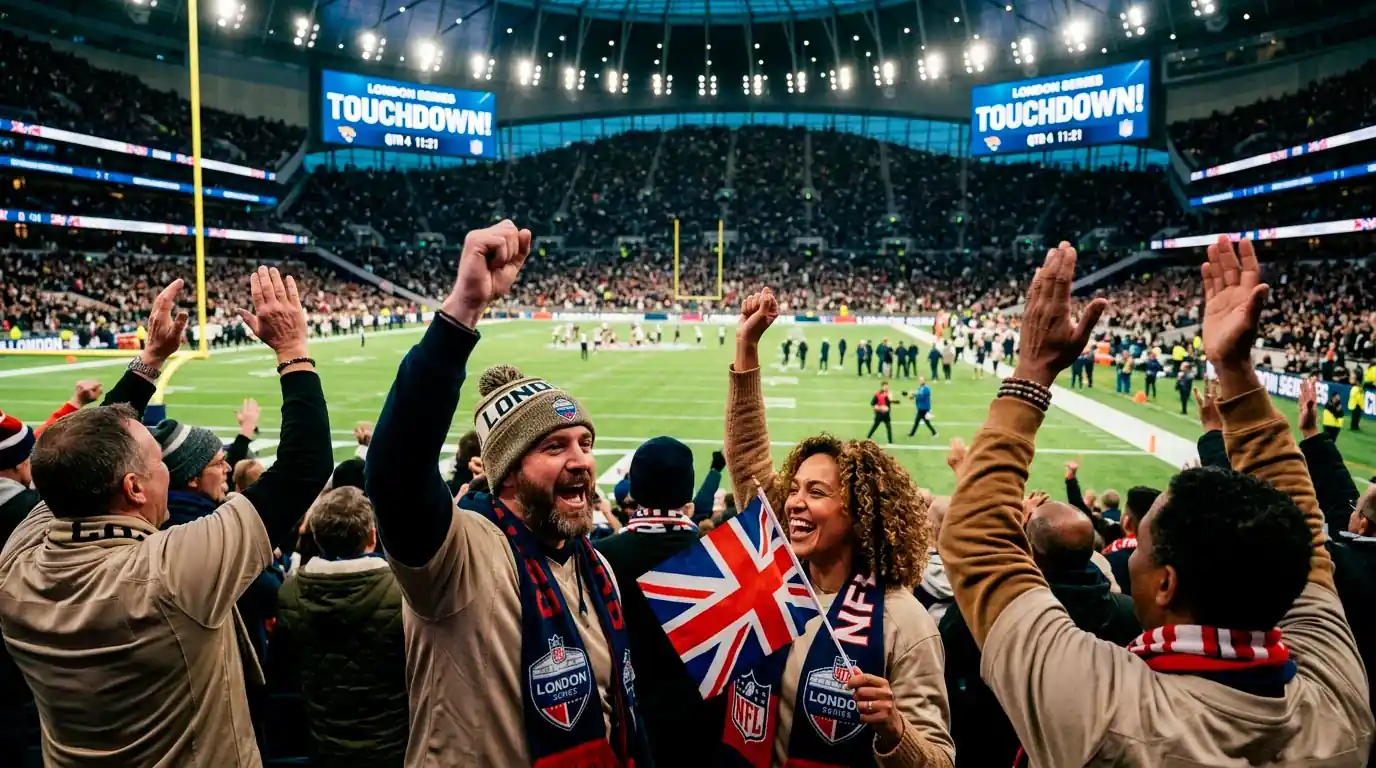
I went to Wembley in October last year for Jaguars against Patriots and counted at least four sets of replica jerseys I had never seen on a British pavement before. The official attendance was 86,651 — a London Games record — and the queues for the stadium concourse stretched halfway round the perimeter at noon for an evening kick-off. That is not the British public discovering NFL. That is the British public arriving in scale.
15 million
NFL fans in the UK by NFL UK & Ireland’s official 2025 count, with around 4 million classified as “avid” supporters in NFL research.
£16.8 billion
Gross gambling yield of the British regulated gambling industry for the financial year to March, up 7.3 per cent year on year.
42+ London games
Total regular-season NFL fixtures played in the British capital since 2007, surpassed during the 2025 season.
6 million viewers
Combined UK and EU television and online audience for the 2025 London Games slate, drawn across a tighter broadcast window than any previous season.
Numbers like these change how you should think about NFL prices. A market with fifteen million potential customers and a regulated supply side worth nearly £17 billion does not behave the way a niche-sport market behaves. The lines are tight, the liquidity is real, and British books treat NFL as a serious product rather than a curiosity bolted onto the football section.
Henry Hodgson, the General Manager of NFL UK & Ireland, put it plainly to Sky Sports last August: “The London games are a continued catalyst for year-round fan engagement and we are focused on serving our 15m fans, reaching new communities and driving growth in flag football participation, which now sees over 100,000 young people play the game.” That is a league treating Britain as a primary territory rather than a stopover.
How NFL fits inside Britain’s wider betting picture
The Gambling Commission breaks remote betting figures into football, racing and a residual category that includes American football. Football pulled £1.3 billion of gross gambling yield in remote markets last year and racing £766.7 million; NFL sits inside the rest. NFL is not yet a top-three British betting sport, but it is the fastest-growing entrant inside that residual bucket. A study of fifty British cities by Smart Betting Guide put London at 137 NFL-related searches per 100,000 residents per month, with Croydon top of the table at 242. The interest is real, distributed and specifically British.
15M fans, 4M avid, £16.8B regulated industry. The British NFL audience now sits inside a fully mature gambling ecosystem. The question worth asking is not whether you should bet, but how to read the prices the British market puts in front of you.
The rest of this guide takes that environment as baseline. Every example, every odds format, every regulatory note is anchored in British practice — fractional prices first, GBP throughout, UKGC licensing assumed.
What an NFL odd actually is
The first NFL bet I ever lost properly was on a Cowboys-Eagles total. I was sure the over would land, it did not, and I sat staring at a coupon that read “11/10” wondering why a price that paid less than my stake had felt so confident. The answer is the answer to most beginner questions: I did not understand what the odd was telling me about the bookmaker’s view of the world.
What a sports odd actually represents
A betting odd is two things compressed into one number. It is the price a bookmaker pays if you are right, and the bookmaker’s stated probability that you will be wrong. Flip between those readings and the whole market becomes legible.
Take a typical NFL spread market at 10/11 — the “minus 110” line in British clothes. The 10/11 says: stake eleven units, win ten if it lands. It also says the bookmaker thinks the bet has roughly a 52.4 per cent chance of winning. The first reading matters for your potential return; the second for whether the price represents value. Both readings sit inside the same number, and a competent NFL bettor flips between them habitually.
The British NFL market lives inside a global one. The American Gaming Association estimates US punters will wager a record $30 billion through legal sportsbooks across the 2025 season — eight and a half per cent more than the previous campaign — and that volume sets the gravitational centre for almost every NFL price in the world. UK books take their cues from American liquidity, then translate prices into fractions for British screens.
Favourites, underdogs and the language British books use
An NFL favourite is the team a sportsbook expects to win; an underdog is the team it expects to lose. The vocabulary gets interesting at the price level — a heavy favourite at 1/4 means stake four to win one, a coin-flip is roughly evens (1/1), and a longshot might sit at 11/4 or even further out. British screens lead with fractional prices for moneyline. American screens use negative numbers for favourites and positive for underdogs. Same maths, different costume.
Pick’em — a game where the bookmaker considers the teams so evenly matched no point spread is offered. Both sides typically priced at 10/11. You see two or three pick’em games across an NFL regular season.
For a deeper walkthrough of converting between formats, computing payouts, and stripping the bookmaker margin out of a number to get a true probability, my step-by-step guide to reading NFL odds goes line by line.
One bet, three readings
You back the Buffalo Bills moneyline at 8/13 with a £20 stake.
Potential profit: £20 × 8 ÷ 13 = £12.31. Total return: £32.31.
Implied probability: 13 ÷ (8 + 13) = 61.9 per cent. The book is saying Buffalo wins roughly 62 times out of 100 — and you only profit if your view of the matchup is rosier than that.
Three formats, one number: fractional, decimal, American
Fractional, decimal and American odds are the three dialects every NFL bettor has to learn. They look completely different on screen, describe identical events, and the conversion between them is mechanical once you do it twice. All three exist on British sportsbook apps because NFL is an American sport priced for a global audience, and books accommodate whichever format the customer prefers. Switching between formats is usually a single tap in the app’s display settings, and the same bet can be displayed in any of the three at any time without changing the underlying price.
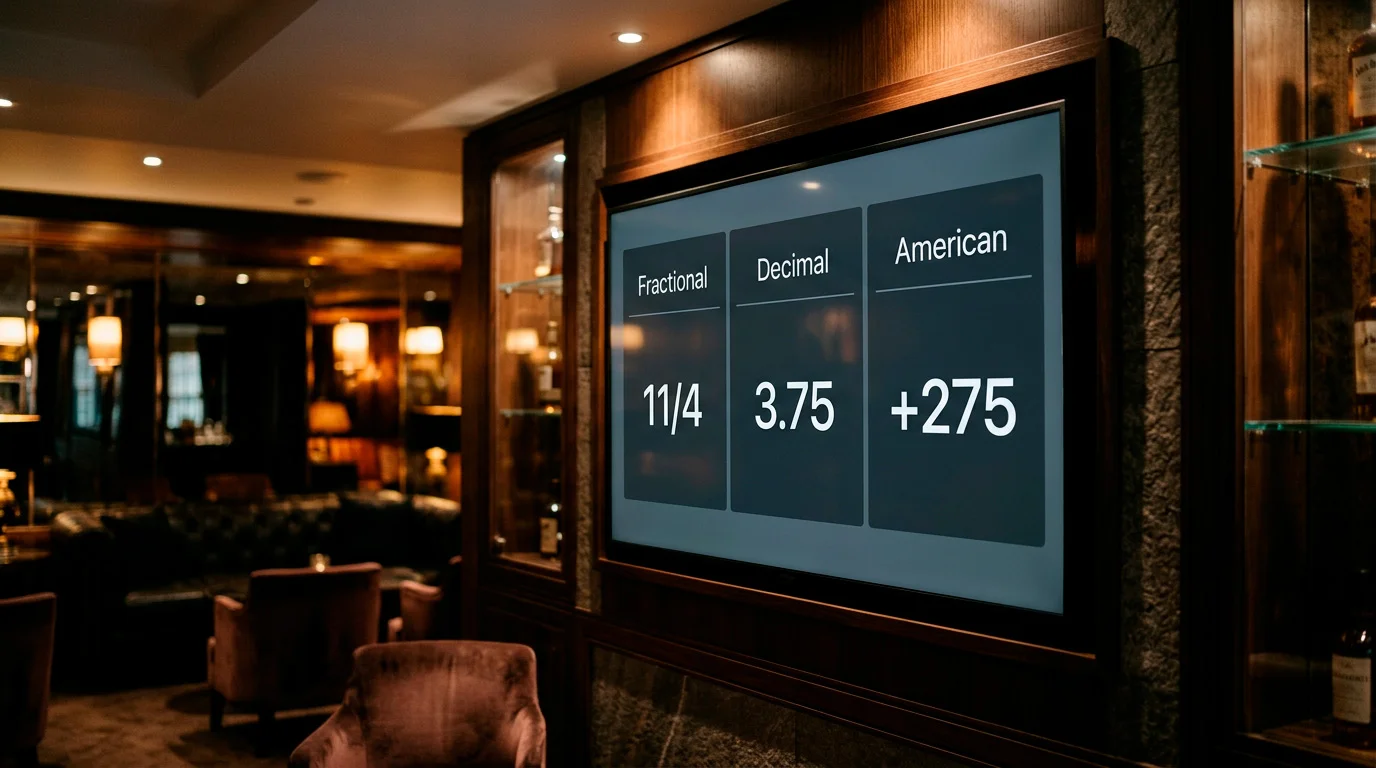
The same bet in three formats
| Fractional | Decimal | American |
|---|---|---|
| 11/4 | 3.75 | +275 |
| 10/11 | 1.91 | -110 |
| 4/9 | 1.44 | -225 |
| 1/1 (Evens) | 2.00 | +100 |
| 5/2 | 3.50 | +250 |
Fractional odds: the British default
Fractional pricing remains the default at every UK-licensed sportsbook for one reason — punters here grew up on it. The format describes profit relative to stake. 11/4 means stake four, win eleven. 4/11 means stake eleven, win four. The left-hand number is profit. The right-hand number is stake. Calculation is simple division: profit equals (left ÷ right) × stake. Add the stake back to get total return.
The same probability can be written in many fractional forms — 5/2 and 10/4 are identical maths, but you almost never see the latter on a British coupon because books simplify to the lowest sensible denominator. Some prices like 27/20 or 7/4 are intentionally awkward because they sit between cleaner fractions and the bookmaker wanted a specific margin. The fractional alphabet is wider than the decimal one, which is part of why some bettors find decimals easier once they have learned both.
Decimal odds: the European default
Decimal odds describe total return — stake plus profit — per unit wagered. Stake £10 at decimal 3.75 and you receive £37.50 back if it lands. Decimal 2.00 is evens. Below 2.00 is odds-on; above is odds-against. Decimal is faster for in-play decisions and easier for parlays because you simply multiply the legs together. Most British sportsbook apps let you toggle the display format from fractional to decimal in user settings.
American odds: the format imported with the sport
American odds use a positive or negative number anchored to a 100-unit stake or payout. -110 means stake $110 to win $100 — the standard NFL spread price. +275 means a $100 stake wins $275. Negative is favourite; positive is underdog. You will encounter American odds on dual-format UK apps, in articles quoting US sources or AGA estimates (the $30 billion staked across the 2025 season comes from American books at American prices), and in line-movement analysis where underlying liquidity is dollar-denominated.
Converting 11/4 across all three formats
Fractional 11/4. To decimal: (11 ÷ 4) + 1 = 3.75. To American: subtract 1 from decimal (giving 2.75), multiply by 100 = +275. To implied probability: 4 ÷ (11 + 4) = 26.7 per cent.
If you only remember one shortcut, make it the decimal-to-implied formula: 1 ÷ decimal odd = implied probability. 1 ÷ 3.75 = 0.267, or 26.7 per cent. Works for every market on every sportsbook in any sport.
The biggest mistake I see new British NFL bettors make is staying loyal to one format and misreading prices in another. American odds are baked into half the NFL coverage online. Decimal dominates European-facing material. Fractional rules British shops. Learn all three and prices stop surprising you.
The core NFL markets at a glance
The first NFL Sunday I watched in a Hammersmith pub, I overheard a gentleman order “the Chiefs and the over” with the confidence of someone reciting a takeaway. He was building a parlay he did not understand, on markets he had not read. This is the reading that fixes that.
Every NFL bet falls into one of six market families: moneyline, spread, totals, props, parlays and futures. Every sub-market is a variation on those six themes.
Moneyline: the simplest bet in the sport
Pick the team that wins. The catch is the price. Heavy favourites pay tiny returns — 4/9 means stake nine to win four — and a single upset wipes out a string of correct picks. Underdog moneyline bets pay handsomely but win less often than the price feels comfortable with. Treat moneyline as a starter market.
Spread: the favourite handicap explained
The spread evens a lopsided matchup by handicapping the favourite a number of points and giving those same points to the underdog. New England -7.5 must win by eight or more for the bet to land. Both sides typically sit at 10/11. Half-points appear on most NFL spreads because the league produces an unusual volume of three-point and seven-point margins. The mechanics of moving across these key margins and detailed walkthroughs of every market live in my full breakdown of NFL betting markets.
Totals (over/under): the points-scored market
The total is the bookmaker’s projection of combined points by both teams. Buffalo against Kansas City might price at 49.5. You pick over (50 or higher) or under (49 or lower). Totals respond to weather, pace and injury news. A 15-mph wind in Buffalo can shave three or four points off a total — a real edge for patient British bettors who watch the conditions, not the hype.
Props: the market that suits British viewing habits
Props are wagers on events inside a game that do not depend on the final score. Player props (Mahomes over 2.5 touchdowns), team props (Eagles to score first), game props (first score a field goal). The variety is enormous and the margin wider than on moneylines and spreads, which means prop pricing is the easiest market for books to inflate. Props are also the market British viewers tend to gravitate toward when they are watching a London Game on Channel 5 or a Sunday-night fixture on Sky — they keep an unfamiliar matchup interesting without requiring a deep team-by-team read.
The word “moneyline” originates from American horse-racing tote terminology, where the principal payout column on the betting board was the “money line” — distinct from place and show payouts. American football inherited the term in the 1970s when fixed-odds betting started replacing parimutuel systems.
Parlays and bet builders: the bookmaker’s favourite product
A parlay combines two or more bets into one ticket. All legs must win. Four 10/11 legs return roughly 14/1 instead of 10/11. Parlays accounted for 22 per cent of US sportsbook handle in 2024 and produced a hold of more than 15 per cent for the books — the highest of any major NFL product. Parlays are popular precisely because the maths is hard and the compounded margin is brutal.
Same-game parlay (SGP)
An SGP — branded “bet builder” at most British books — combines legs from the same game. The legs are correlated (if Mahomes throws three, the Chiefs probably win and the over probably lands), so books reprice the parlay below what the multiplied independent prices would give.
Futures: betting today on what happens months from now
Futures are long-term bets on season-end outcomes — Super Bowl winner, division winner, MVP, season win totals. Prices post before the season and update weekly. Liquidity is thinner than on single-game markets, so margins are wider, but futures pay the longest prices on the board if your read is right early. The trade-off is patience: a futures stake sits with the bookmaker for months, sometimes the entire season, before settling. Treat them as a small slice of your overall NFL action rather than a primary product.
From single bets to single events — the next stop is the biggest NFL market of the year, and the one a record number of British viewers will watch live.
Super Bowl LX and the futures shelf
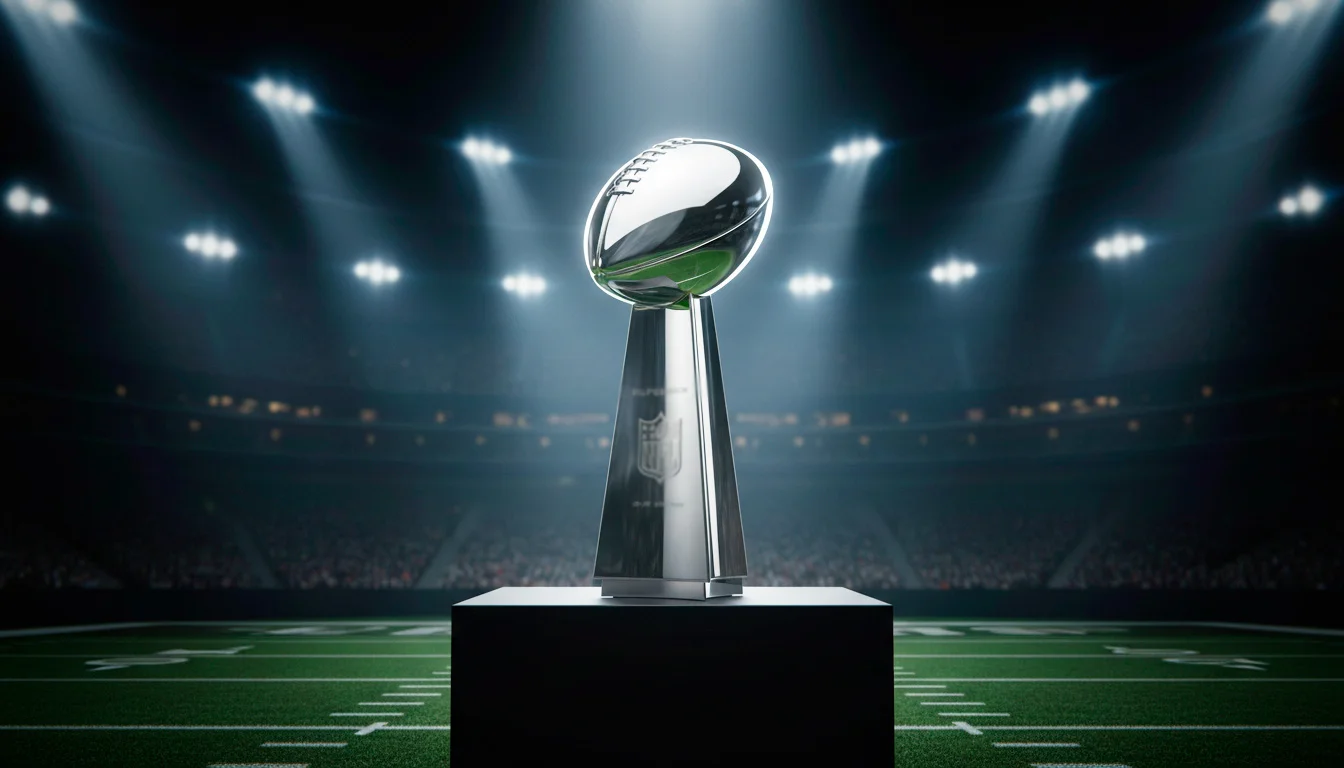
Super Bowl LX is the loudest betting day in the legal American calendar, and the noise has finally crossed the Atlantic. The American Gaming Association projects $1.76 billion in legal handle on the game alone — a record, and a number that captures the pull this single fixture has on NFL pricing worldwide.
$1.76 billion projected legal handle on Super Bowl LX in the United States. Prices on every UK Super Bowl market — outright winner, MVP, halftime novelties, exact final score — follow that liquidity. When American pricing tightens, British pricing tightens within the hour.
Inside the wider US sports betting market, 2025 saw volume reach a different scale. Total US sportsbook handle hit $166.94 billion across the year, eleven per cent up year on year, with revenue of $16.96 billion. NFL alone accounts for roughly a third. Every British book offering Super Bowl markets is fishing in those waters, then translating prices into pounds and fractions for the audience watching at midnight.
The market families on Super Bowl day
Super Bowl betting splits into four families. Outright winner is the headline market, posted before the season and tightening through the playoffs. Conference winner markets (AFC and NFC champion) are halfway-house bets to the same outcome. MVP markets price the player most likely to be voted Most Valuable in the game itself, which is overwhelmingly a quarterback bet — nine of the last ten Super Bowl MVPs have been QBs. Novelty and prop markets cover everything from the first song of the halftime show to the colour of the Gatorade bath.
The MVP market rewards British bettors who read the matchup rather than the storyline. Books price MVP off voter behaviour, which heavily favours the winning team’s quarterback. If you have a strong view on the likely victor, the winning-team-QB MVP price often offers more value than the outright. For the deeper mechanics of how British books price the Super Bowl and when the outright moves, my Super Bowl LX UK betting guide walks through the market families and the price-discovery timeline.
Why the futures shelf is built the way it is
Pre-season futures open before kick-off in September and trade through to February. The price moves on three things: news, results, and the weight of money landing on each side. A favourite can shorten from 7/2 to 11/4 inside a single Sunday on one statement performance. The Lombardi Trophy market is the biggest single-event futures market on the British sportsbook calendar — liquidity is concentrated, prices tighter than for individual awards. For awards markets like MVP, OPOY, DPOY and Coach of the Year, prices can move 30 to 40 per cent on a single quarter because the voter pool is small and narrative-driven.
One discipline saves more money on Super Bowl markets than any other: place your futures bets early, in modest stakes, and never roll proceeds into more futures during the playoffs.
Bill Miller, President and CEO of the American Gaming Association, summed up the responsible side when announcing this season’s handle estimate: “Legal sports betting enhances the fun and friendly competition that make NFL games and traditions even more special. With strong consumer protections and a shared commitment to responsibility, the legal, regulated sports betting industry encourages all football fans to have a game plan before placing a bet.”
The British rulebook: regulator, tax and what makes the UK different
The single most under-appreciated fact about NFL betting in Britain is also the one most British bettors never quite believe when I tell them. You do not pay tax on your winnings. Not on the profit, not on the stake, not on the return. The bookmaker pays the duty; the punter keeps the lot.
UK NFL winnings are taxed at 0 per cent for the bettor. Tax is paid by the operator through General Betting Duty (currently 15 per cent of bookmaker gross profits). For the punter, profit is profit.
Who actually regulates NFL betting in Britain
The Gambling Commission is the statutory regulator for every UK-licensed sportsbook offering NFL markets. It sits under the Department for Culture, Media and Sport and publishes the quarterly Industry Statistics that anchor most of the macro numbers in this guide. Every sportsbook accepting NFL bets from a British IP address must hold an operating licence. Sites without one cannot legally take action from British residents, and most card schemes block deposits to unlicensed operators at source.
By the most recent count there were 8,254 licensed gambling premises in Britain (a mix of casinos, betting shops, bingo halls and adult gaming centres) and 5,782 betting shops specifically. Shop count has fallen for eleven consecutive years as the market has shifted online. NFL betting in Britain is overwhelmingly digital — 95 per cent of UK online gambling activity happens at home.
General Betting Duty and the bookmaker’s tax
General Betting Duty is the tax UK bookmakers pay on gross betting profits. The rate has been 15 per cent since 2002, and government GBD receipts climbed to £714 million across the financial year to March (up from £654 million the year before). The duty is paid out of the margin baked into every NFL price you see, which is part of why prices are never the “true” probability.
United States NFL betting
State-by-state regulation. Federal income tax due on winnings above $600 per bet. State income tax may apply on top. Sportsbooks pay state taxes from 6.75 per cent in Iowa to 51 per cent in New York.
United Kingdom NFL betting
Single regulator covering the whole country. Zero tax on winnings for the bettor. Bookmakers pay General Betting Duty at 15 per cent of gross profits. Marketing rules apply per-product and per-channel. Financial vulnerability checks introduced in 2025.
Financial vulnerability checks and what they actually do
Since 28 February 2025, UK sportsbooks have run light-touch financial vulnerability checks on online accounts above certain loss thresholds. The check flags customers who appear to be losing more than they can plausibly afford. In practice it runs through a soft credit reference — no impact on your credit score, no document upload — and only escalates if the soft check raises a flag.
From 1 May 2025, a parallel rule changed marketing to existing customers. Operators can now only send marketing for products and channels for which the customer has given explicit, granular consent. Opting in to email about NFL bonuses no longer rolls you into push notifications about casino offers.
What is changing in the duty structure
HM Treasury opened a consultation in April 2025 on consolidating the various remote betting duties into a single Remote Gambling Duty. The consultation closed on 21 July 2025; conclusions are pending. If implemented, the change would simplify the bookmaker’s tax position rather than alter the bettor’s. Your zero-rate on winnings is structural and not part of any current reform proposal.
For a deeper walk through licensing, the proposed Remote Gambling Duty, the marketing rules and what to expect from a financial vulnerability check, see my full NFL betting UK regulation guide.
Why the line moves and why you can trust it
The first time I watched an NFL line move three points inside thirty seconds was on a Wednesday morning in October. Patrick Mahomes had taken a knock at training camp; the news broke at 11:42am London time; by 11:43 every UK book on my screen had retreated the Chiefs spread by between 2.5 and 3 points. That speed is not luck. It is the architecture of NFL betting working as designed.
NFL prices move on three things. News (injuries, suspensions, weather, lineup changes), money (large or sharp bets on one side), and time (the closer to kick-off, the tighter the line). British books take their cue from the deepest American books — underlying liquidity is dollar-denominated — and translation into fractions happens within seconds.
Why you can trust an NFL line in the first place
The NFL invests heavily in market integrity. Every team employs an Integrity Representative — usually a retired FBI special agent — to monitor unusual betting activity and line movement on game day and report it to the league office. The league also contracts two independent integrity-monitoring partners, Genius Sports and IC360, to flag suspicious wagering in real time.
NFL Integrity Monitoring in plain English
If a line moves in a way the algorithm cannot explain by news or normal sharp-money flow, an alert is generated. If multiple alerts cluster around a single event or player, it gets escalated. This mechanism is the reason NFL bettors generally treat their lines as honest.
From the 2024 season onward, every NFL player — veterans and rookies alike — must complete in-person training on the league’s gambling policy, jointly designed with the players’ association. Players cannot bet on any NFL game in any market. Integrity monitoring plus player education makes NFL markets among the most heavily policed in world sport.
The reading discipline for line movement
An opening line is the bookmaker’s first guess at the right price; a closing line is its final guess after a week of money and information has been absorbed. Closing lines are statistically the most accurate prices NFL books offer, which is why “beating the close” is the metric professional bettors use to grade their own picks.
Lines tend to drift toward the publicly favoured team through Tuesday and Wednesday (early-week public money), then back toward the bookmaker’s view by Friday and Saturday as sharp money arrives. A line moving against the apparent direction of public money — a “reverse line move” — means the book is responding to bet size rather than bet count, a signal worth respecting.
NFL is one of the few sports where the price you see this morning is, in a meaningful sense, smarter than your own opinion. The market is not infallible — it can be beaten — but it is built on enough money, monitoring and transparency that it deserves to be your starting point rather than your antagonist.
Honest numbers: betting NFL without losing the run of yourself

I tell every reader who asks me for “betting advice” the same thing first. The most important number in NFL betting is not on the coupon. It is the number you wrote down before you opened the app — the amount you decided you could afford to lose this month without a single domino in your life falling over. Everything else is technique.
The Gambling Survey for Great Britain tells us who is doing what. In Q1 2025, 8 per cent of British adults placed a sports bet online in the past four weeks; by Q2 the figure was 10 per cent. Across the most recent waves, 48 per cent of adults reported some gambling activity in the past four weeks, falling to 27 per cent if you strip out lottery-only participants. NFL betting sits inside that 27 per cent.
Who actually bets on NFL in Britain
15 per cent of men and 4 per cent of women in Britain placed a sports bet in Q1 2025. Mobile dominates — 76 per cent of bettors aged 18 to 24 wager from a phone, and 95 per cent of UK online gambling activity happens at home.
Tim Miller, the Gambling Commission’s Director of Research and Policy, summed up the regulator’s posture cleanly: “We use the data to continuously keep under review and, where needed, strengthen the suite of protections for young people that we require gambling companies to have in place.”
Tools that work — set them before your first NFL bet
Every UKGC-licensed sportsbook is required to offer the following self-management tools. They are mandatory features inside every NFL betting app you can legally use in this country.
Set these before placing a single NFL bet
- Deposit limit — daily, weekly or monthly cap on money moved into the account.
- Loss limit — separate cap on net loss the account can incur in a given period.
- Wager limit — maximum stake per bet, useful for late-Sunday chase tendencies.
- Reality check — pop-up reminders at 30, 60 or 90 minutes of session time.
- Time-out — temporary block from a single operator for 24 hours up to 6 weeks.
- Self-exclusion — operator-level block for at least 6 months, not reversible inside the period.
- GamStop — national multi-operator self-exclusion covering every UKGC-licensed site simultaneously.
Healthy NFL betting habits
- Bet only with money budgeted for entertainment, not income or savings.
- Track every wager — stake, market, result — in a simple spreadsheet.
- Walk away from a losing Sunday at full time, not at the next slate.
- Treat free bets and bonuses as marketing, not money.
Behaviours to refuse
- Increasing stakes to chase a losing run.
- Betting under the influence on long Sunday-night markets.
- Borrowing money or moving funds from essential accounts.
- Hiding the activity or the losses from people who care about you.
The British support landscape is among the world’s most extensive. GamCare runs the 24-hour National Gambling Helpline with adviser-led support and live chat. GambleAware funds research, education and treatment, free at point of use. GamStop is the national self-exclusion scheme — one registration covers every UKGC-licensed site for six months, one year or five years.
For a deeper walk through the GSGB data, the PGSI scoring system, bankroll fundamentals specific to NFL slates and the support services available, see my responsible NFL betting guide.
If reading this section made you want to take a pause, that is a useful signal. The single best protection against problem gambling is willingness to notice the signal early. The National Gambling Helpline is on 0808 8020 133 — free, confidential, around the clock.
Where the games actually live in Britain

Two pieces of broadcast paper signed last summer changed how British NFL betting actually feels in your living room on a Sunday night. Sky Sports renewed and expanded its rights deal — a three-year contract running through the 2025 to 2028 seasons, with roughly 50 per cent more live games than the previous arrangement — and Channel 5 became the first free-to-air partner the NFL has had in Britain in a generation.
Sky Sports — the depth option
Three-year deal covering 2025 to 2028 seasons. Live coverage of every Sunday slate, Monday Night Football, Thursday Night Football, the full London Games triple-header, the playoffs and Super Bowl LX. Subscription required.
Channel 5 — the free-to-air option
Multi-year partnership starting with the 2025 season. Live games every Sunday at 18:00 and 21:00 GMT, plus the London and Dublin Games, three playoff matches and Super Bowl LX. The 5ACTION digital channel carries simulcasts of additional fixtures. No subscription needed.
The early audience numbers tell the story of what it took for NFL to land on free-to-air. The debut Channel 5 broadcast — a Sunday-night Commanders against Giants in September — averaged 160,000 viewers with a peak of 220,000, ranking tenth in the channel’s full-day output. The simulcast of Packers-Lions on 5ACTION, scheduled directly opposite, averaged just 22,000. British NFL viewers want one quality stream, not two competing ones.
What the broadcast picture means for British bettors
More live football on free-to-air translates directly into more betting volume on Sunday-night slates, and British books have priced accordingly. Same-game parlay markets on the Channel 5 fixture have markedly tighter pricing than equivalent games kicking off at 22:00 or 02:00 GMT, because the liquidity is concentrated. If you want narrower margins, bet on the games British viewers are actually watching.
Gerrit Meier, Managing Director and Head of NFL International, framed the Channel 5 deal as part of a deliberate strategic investment: “The 2025 NFL season will see fans able to access the most comprehensive broadcast coverage in the U.K. to date, a market that continues to be a priority for the NFL as we accelerate global growth efforts.”
Channel 5’s “NFL Big Game Night” is the first time American football has been broadcast on a major British free-to-air channel since Channel 4 ended its Sunday-night NFL run in the early 1990s.
The London Games betting microclimate
The 2025 season pushed the cumulative count of NFL regular-season games played in London past 42 since the series began at Wembley in 2007. The Jets, Browns and Jaguars made the trip last autumn, all three fixtures sold out, and betting volume on London games at British books was visibly higher than for equivalent NFL games kicking off at the same UK time but staged in the United States.
Books accounting for the higher British liquidity tend to set tighter spreads on London Games, and same-game parlay margins widen because volume on novelty markets is heavy. The full mechanics of London-game pricing — home-team designation, jet lag effects on visitors — sit deeper in the cluster than this overview can carry.
The shape of the UK NFL market by 2030
Forecasts have a way of looking sober when written and ridiculous when read back five years later. With that caveat, the picture for British NFL betting through to the end of the decade is unusually consistent across independent forecasters, and the direction of travel is one way.
11.4 per cent annual growth, $21.3 billion market by 2030. Grand View Research’s UK Sports Betting forecast projects a compound annual growth rate of 11.4 per cent across 2025 to 2030, with the market reaching $21.32 billion (roughly £17 billion) by the end of the decade.
The wider global picture is similar. Maximize Market Research values the global sports betting market at $114.15 billion in 2025 and projects $233.74 billion by 2032 — a compound annual growth rate of 10.78 per cent. Britain’s growth rate sits modestly above the global average. The regulated environment is more mature than most jurisdictions, and the UK NFL audience is starting from a still-modest base relative to football and racing.
What is likely to drive the British growth curve
Three forces stand out. First, broadcast — the Channel 5 free-to-air deal and the expanded Sky agreement both run through 2028, and the cumulative effect of multiple seasons of consistent UK coverage is a slow accelerator that compounds. Second, league-side investment — Roger Goodell, the NFL Commissioner, has been explicit about the international ambition: “I do believe we can get to 16 games. Then you’d be in 16 different markets, or you might double up like we’re doing in the UK right now.” A sixteen-international-game vision in a league that played seven international fixtures in 2025. Britain remains the anchor of that strategy.
Third, regulatory clarity. The HM Treasury consultation on a single Remote Gambling Duty closed in July 2025; whatever the outcome, it points toward a simpler tax landscape for operators, which tends to translate into tighter consumer pricing. The Commission’s work on financial vulnerability checks and per-product marketing rules gives the industry a stable framework to build on.
The most likely shape of the next five years is more NFL on British screens, more competition between licensed operators, marginally tighter prices for British punters and continued professionalisation of the responsible-betting framework. None of that is exciting in a headline sense. All of it is good news for British NFL bettors who want a calm, regulated, transparent market.
Questions readers keep asking me
How do NFL betting odds work in the UK?
NFL odds describe both the price you are paid if right and the implied probability of that outcome. UK sportsbooks default to fractional pricing (11/4, 4/9, 5/2): left number is your profit, right is your stake. Decimal and American are usually available as display alternatives. Margins are baked in — roughly 4 to 8 per cent on standard moneyline and spread markets, considerably wider on parlays.
What is the difference between American, decimal and fractional odds?
Three formats, identical maths. Fractional describes profit relative to stake — 11/4 means stake four to win eleven. Decimal describes total return — at 3.75, every unit returns 3.75 including stake. American uses a 100-unit anchor — -110 means stake $110 to win $100, +275 means a $100 stake wins $275. UK books default to fractional, but almost all let you switch.
What is a point spread and how does the “hook” work?
A spread evens a mismatched fixture by handicapping the favourite. Patriots -7.5 means they must win by eight or more; Jets +7.5 means New York can lose by seven or win outright to cover. The “hook” is the half-point books insert to avoid pushes — without it, a 7-point win on Patriots -7 would refund the stake. Books charge extra for half-points around key numbers like 3 and 7.
Is NFL betting legal in the UK and which regulator covers it?
NFL betting is fully legal through any sportsbook holding a Gambling Commission licence. Every operator advertising NFL markets to UK customers must be Commission-licensed; unlicensed sites cannot legally take bets from British residents, and most card schemes block deposits to them. The Commission sets rules on marketing, financial vulnerability checks and player protections. Britain has 8,254 licensed gambling premises at the most recent count.
Are NFL betting winnings taxed in the UK?
No. UK NFL betting winnings are not taxable for the bettor. No income tax, no capital gains tax, no withholding. The bookmaker pays General Betting Duty — 15 per cent of gross profits — and you keep the full return. This is a structural advantage British bettors hold over Americans, who face federal income tax on winnings above $600 plus possible state tax. The zero rate has held since 2001.
What is the best market for beginners — moneyline, spread or totals?
Moneyline is simplest (pick the winner) but produces the worst price-to-probability trade in close games. Spreads offer more consistent pricing — both sides typically sit at 10/11, a predictable margin. Totals reward attention to weather, pace and matchups. My recommendation for a new British bettor: start with totals on a single Sunday-afternoon game per week, in modest stakes, then expand into spreads.
How are Super Bowl LX odds calculated and when do they open?
Outright winner prices open before the regular season in September, with all 32 teams listed. Early prices reflect the previous year’s results, off-season roster changes, projected win totals and reads on coaching and quarterback stability. Numbers update continuously — every win or loss shifts probability, major injuries move the price, and playoffs cause sharp re-pricing weekly. Super Bowl LX is projected to draw a record $1.76 billion in legal US handle, the liquidity British prices follow.
Created by the ”nfl Betting ods” editorial team.